Weird – The Gremlins in this forum have to date, only been a nuisance, that and a hindrance in finding posts. But now they seem to have kicked it up a notch, and have somehow made my post to this thread go missing ???
DL – I wasn't saying that big wood and scribe were the universal driving forces, just some of the contributing factors, in the use of tooling intended to work timber low, like scribe is and the efficiency of keeping things on or near the scribe floor. I was again not suggesting that these were the only factors.
I'm also well aware that the English and its colonists here in America scribed by tradition, I am surrounded by it, blessed to live on a rural road peppered with buildings built in the1760's and 70's in the building boom that erupted as long strife came to an abrupt end at the conclusion of the F&I. Houses and barns which here on the road still outnumber all those that have been built since. Scribed English tying is the rule here in Northern New England, these layout methods practiced here for a full two centuries, a mark Square rule is only now just about to reach. I've also been in many English English frames having been frame spotting in the UK more than once.
I've been scribing houses, barns and bridges for near twenty years, having learned from a Brit framer many years ago now. Many of these years spent here on the ridge, in what might be described as a typical carpenters yard. I mention this to demonstrate why it is I might have some understanding as to the flow of work in a scribe yard. Most timber goes into at least two layups and stays in or near that area until the final drop it will see, and only then moves to the cutting area, posts plates and ties typically staying put because this flat level area tends to double as the assembly area. Secondary members which go into only one layup, go into a pile, waiting to be cut, as a needed something to do to keep the crew busy on rainy days under smaller covered workstations
Division of labor and approach to the work in the scribe yard is not driven by hierarchy, or a desire to scribe continuously, that is just how a scribe yard works, most of the cutting is post layout. It is driven by circumstance and the weather.
Its akin to swinging an ax day in day out to cut joinery. With the daily doing comes the understanding that the methods you are using are working for you because they worked for those we are following.
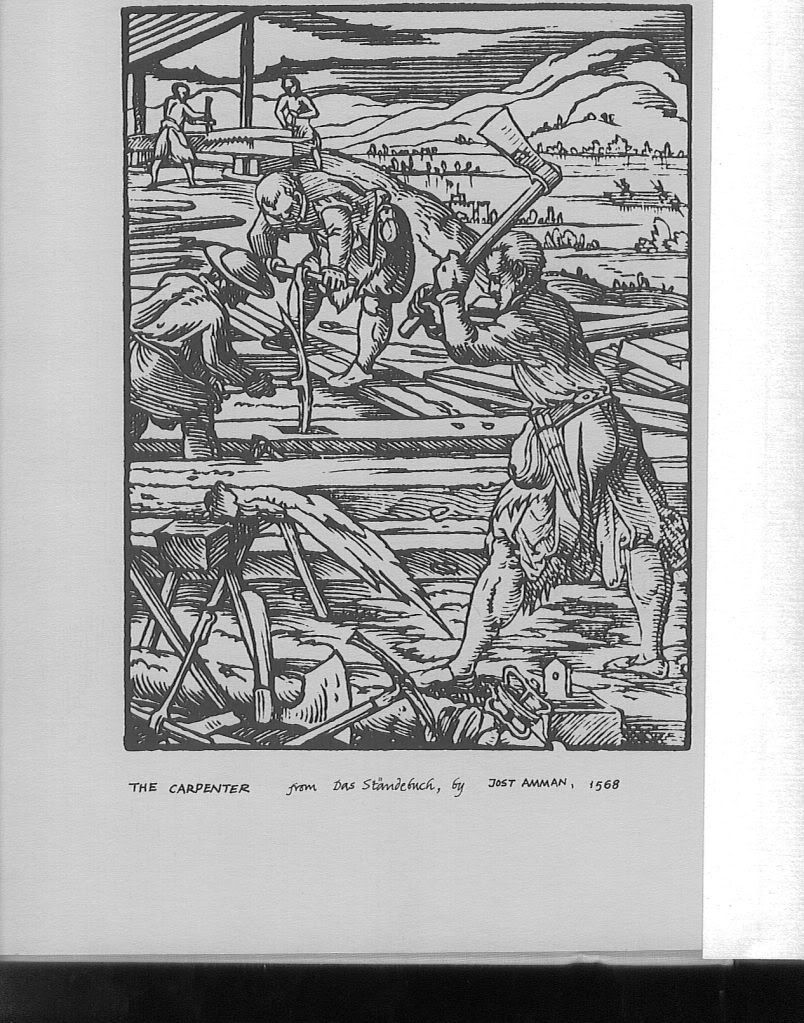
I've always been fond of this Ammon woodcut of a probable German carpenters yard because it shows hewing at what I see as the appropriate height, and it would seem almost backwards to many. What is seen as the logically low work is happening high, while most tasks related to the cutting of joinery are happening low.